Choosing the Right Code Reader for Your Environment: Hospitals vs Warehouses
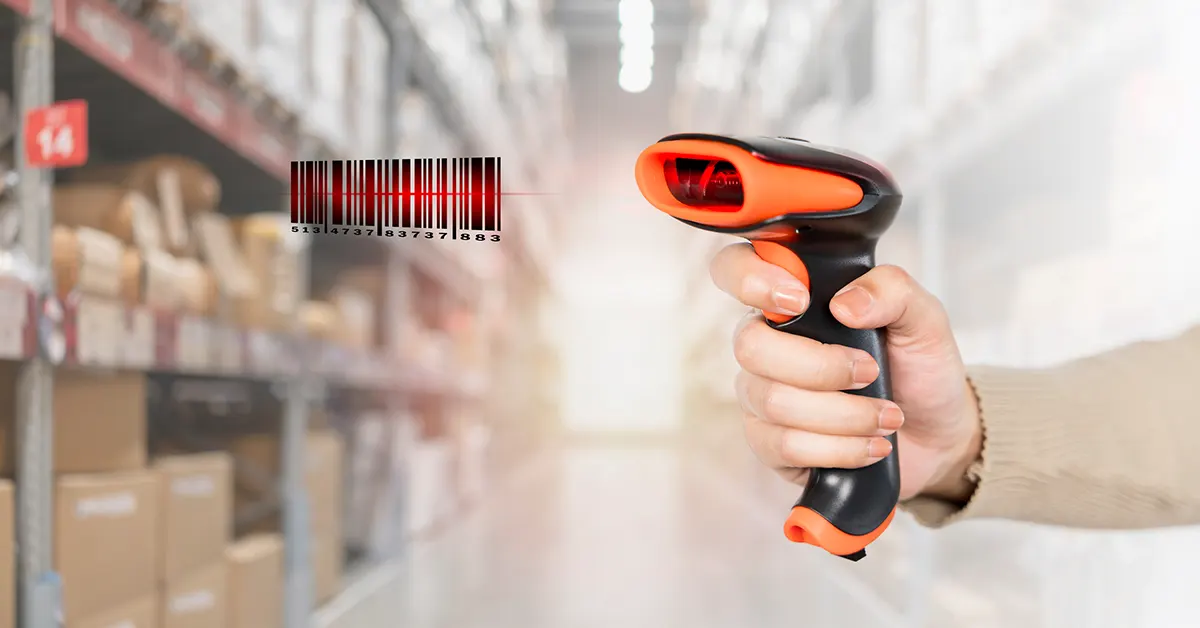
Code readers (barcode and QR scanners) are essential tools in industries that depend on speed, accuracy, and reliable data capture. But the right reader for a hospital may not be the same as one for a warehouse. By understanding your environment and workflow, you can choose a device that boosts productivity, reduces errors, and fits seamlessly into daily operations.
Why Environment Matters
- Hospitals need scanners that are disinfectant-ready, mobile, and capable of handling tiny or curved barcodes on wristbands and specimen vials.
- Warehouses demand rugged devices with long-range scanning and the ability to survive dust, drops, and heavy usage.
Your choice should balance durability, connectivity, and scan capability with the specific challenges of your setting.
Comparison Chart: Hospital vs Warehouse Use Cases
Environment |
Typical Use Cases |
Key Scanner Features Needed |
Best Fit Model |
Hospital |
|
|
CR2700 Wireless |
Warehouse |
|
|
CR950 Wired for desks/packing stations (affordable, omnidirectional) CR2700 Wireless for mobile staff in large facilities |
How to Decide
- Define the Environment
Will the scanner be used at a bedside, lab, or packing station? Or on the move in aisles, loading docks, or wards? - Match the Features
- Hospitals ? prioritize cleanability, wireless mobility, and small-label precision.
- Warehouses ? focus on ruggedness, speed, and mobility for long shifts.
- Balance Cost vs Value
- Wired models like the CR950 are budget-friendly and great for fixed stations.
- Wireless models like the CR2700 are investments in mobility, ruggedness, and long-term flexibility.
Recommended Accessories
Getting the right code reader is only half the equation — accessories ensure smooth daily use.
For Hospitals
- Inductive Charging Stations – eliminates exposed metal contacts, reducing infection risks and corrosion from cleaning.
- Desktop & Wall Mounts – keep scanners accessible at nurse stations without clutter.
- Spare Batteries (B27) – quick-release design makes swapping fast during long shifts.
For Warehouses
- Hands-Free Stands – speed up scanning at packing stations.
- Protective Holsters/Mounts – let mobile staff carry scanners safely while moving through aisles.
- Extended Cables (for wired models like CR950) – ensure easy reach across large desks or conveyor areas.
- Multi-Bay Chargers – charge multiple scanners at once, ensuring full readiness for peak shifts.
FAQs: Hospitals & Warehouses
For Hospital IT Managers
Q: Can scanners withstand constant disinfection?
Yes — the CR2700 is built with CodeShield® housing designed to resist damage from hospital-grade disinfectants. Unlike standard plastics, it won’t degrade with frequent wipe-downs.
Q: What if nurses need to scan small specimen labels?
The CR2700 features dual-field optics, allowing precise scanning of tiny barcodes on vials, as well as larger wristband barcodes — all with the same device.
Q: How do we avoid accidental mis-scans in a busy ward?
The CR2700 provides audible, visual, and haptic feedback, ensuring staff know immediately when a scan is successful — even in noisy or fast-paced environments.
For Warehouse Logistics Managers
Q: Do we need wireless scanners in the warehouse?
Not always. If scanners stay at packing or receiving stations, the CR950 wired model is reliable and cost-efficient. For staff moving through aisles or loading docks, the CR2700 wireless offers the mobility needed.
Q: Can scanners handle dusty or rough conditions?
Yes — the CR2700 has an IP65 rating, making it resistant to dust ingress and water. It’s rugged enough for distribution centers and industrial environments.
Q: What happens if Wi-Fi drops during scanning?
The CR2700 supports batch mode, which stores scans offline and uploads them once reconnected. This ensures no data loss during outages or when scanning in low-signal areas.
Final Thoughts
Code readers aren’t one-size-fits-all. The same device that thrives in a sterile hospital may not survive the dust and impact of a warehouse floor — and vice versa.
- In hospitals, prioritize infection control, wireless mobility, and scanning versatility.
- In warehouses, durability, long-range scanning, and speed drive ROI.
By aligning your choice with your environment’s needs — and pairing scanners with the right accessories — you’ll get maximum efficiency, accuracy, and return on investment.