ID Card Printing Blog

January 13 2020 |
In 2020, Secure ID Cards are more Important than Ever
The year 2020 has arrived and it is a new year full of new hope and opportunities. Unfortunately, if history is any indicator, criminals feel the same way. Those who would do you or your organization harm are working up new methods and tactics to commit some of the world’s oldest crimes. Theft, fraud, and acts of violence are nothing new, but the strategies behind them continually evolve with the times.

June 13 2019 |
How to create a secure, affordable government ID
When you work for a government agency you will know that every agency has clearly defined requirements for the ID cards they issue to protect the personal and often sensitive information the cards contain. Card security is essential, it doesn’t matter whether the ID card has been issued to a government employee and intended to permit or restrict access to secure government facilities or whether the card will act as a method of citizen identification like a drivers’ license.

June 03 2019 |
How To Create A Truly Professional ID Photo

August 01 2018 |
Exactly How Secure Does Your Organization’s ID Card Need to Be?

February 19 2018 |
How to keep your ID card safe and secure at all times

January 24 2018 |
ID Cards Printing Essentials
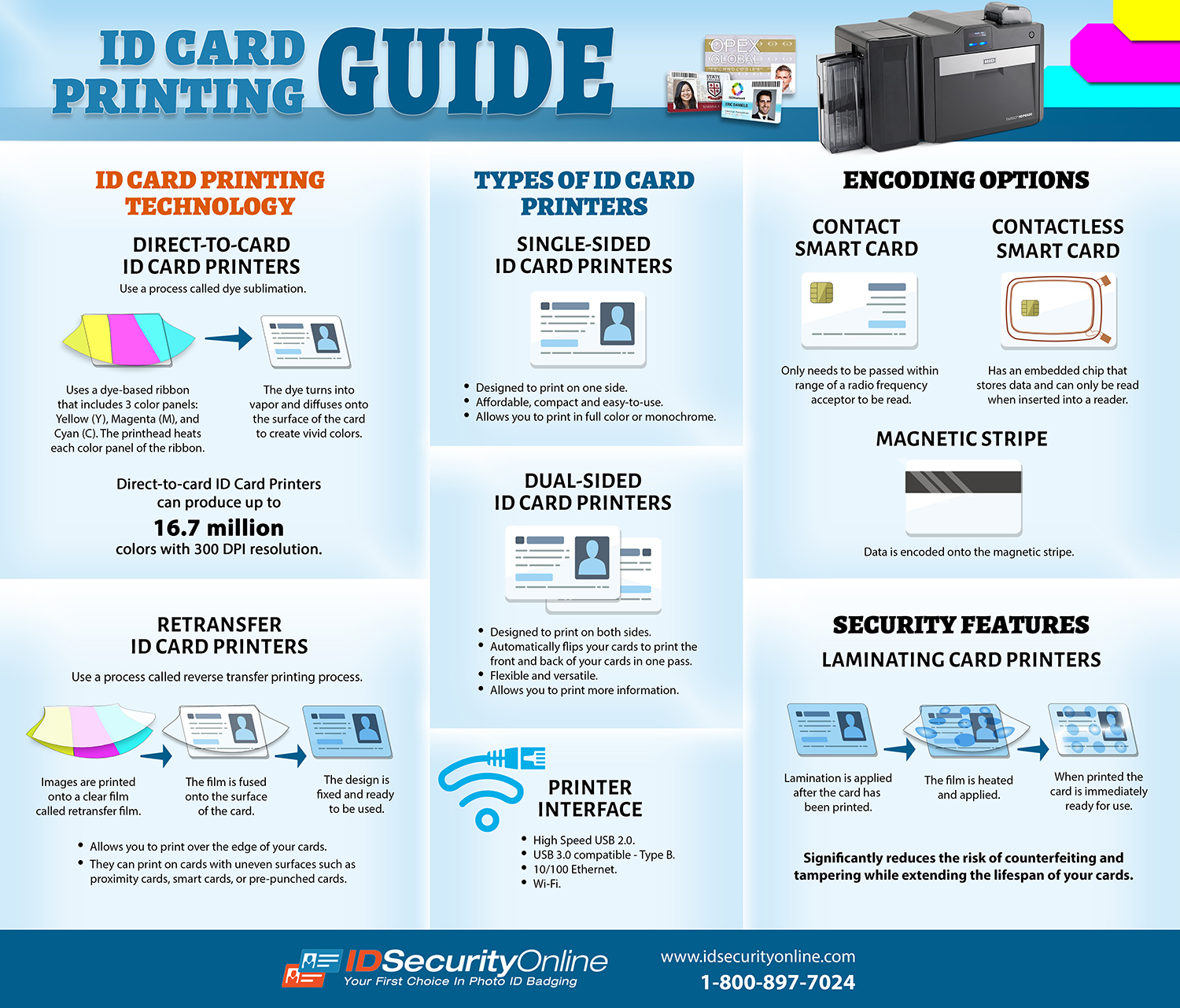
ID Security Online provides the ability to identify privileges and users while automating the process. Cards are available in full colour or monochrome, credit card size or oversized, single or dual-sided. IDSecurity Online offers four different types of ID cards. They are: PVC cards, iCLASS® cards, Pre-printed cards, Proximity cards.

November 14 2017 |
Considering Contactless Cards

October 30 2017 |
What Size ID Card Should I Choose?

October 16 2017 |
What’s the Difference Between PET and PVC Cards?
You may have wondered what’s the difference between PVC and PET cards used for identification purposes. Here are a few quick guidelines for selecting the appropriate card for your needs and budget.

September 11 2017 |
Using Watermarks Can Increase Your Security
When you issue ID security cards or badges, you want the most effective and secure form of card possible to ensure your security measures are being met. Whether you issue student ID cards, driver’s licenses, membership cards, or security badges for employees, it should be easy for you to verify the identity of the holder while incredibly difficult for someone else to forge or copy an ID security card you issue.
Watermarks are an inexpensive, simple way to add an additional layer of security to your ID security cards or badges.


August 17 2017 |
How to Protect Your Proximity Cards
All proximity cards use similar technology to create the functionality that you need for access control. This includes an antenna connected to an electronic chip that contains all of the cardÙs information. Both the antenna and the chip are embedded into the proximity card at the time of manufacture.
Because the ID card is picked up by the proximity reader at a distance, there’s no physical contact between the card and the reader, which should make proximity cards last longer and require less maintenance for your readers.

August 14 2017 |
What Do All the Options Mean When Ordering Proximity Cards?
If you’re new to proximity cards or in the process of researching if they’re a good fit for your company’s ID security system, you may have run across the acronym LGGMN and wondered what that was all about.
Each of the letters in LGGMN stands for an option you must choose when ordering your proximity cards. LGGMN itself is a standard proximity card most often ordered by companies for their ID security needs.

July 28 2017 |
College ID Card Printing: The Need for Speed
Imagine you have 500 new incoming students and staff who are waiting in line for their school IDs to be issued.
Now imagine your ID card printer only prints 100 cards an hour. That’s a long time standing in line and an even longer time for your staff who have to process each ID card.
While the need for speed is sometimes a paramount concern when issuing student ID cards, there are some other factors you need to consider before selecting the fastest printer on the market.

July 26 2017 |
Why School ID Cards are a Good Idea
Identification cards keep a school or campus safer for students and faculty because it’s easy to instantly identify who belongs and who doesn’t. Visitors are usually issued some form of temporary ID card to make them readily recognizable. In this way, it’s immediately noticeable when someone doesn’t have a valid reason for being in the school or on the campus.
There are few schools today that don’t issue some kind of ID security card to staff and/or students, from elementary schools to large university campuses. Usually a security precaution, ID solutions run the gambit from a simple photo ID badge to a smart card with imbedded technology for multiple functionality.

June 21 2017 |
What You Need to Know About Adding QR Codes to Your ID Badges
There are few companies who use only a photo ID badge as a security access point to their facilities. Most have migrated to some type of additional information contained on the card, such as bar codes, QR codes, magnetic stripes, or smart chips that offer additional information. These types of technologies help you gain instant access to more detailed information about the holder of the card, and greatly aid in adding another layer of security to your building’s system.
Adding a high-tech option for storing additional data on an ID badge doesn’t need to break the bank, however. QR codes are a high-tech, low-cost option for companies with varying levels of access or who require additional information to verify the card holder’s identification.

June 20 2017 |
When to Use ID Card Services or Print Your Own

May 15 2017 |
How to Get the Most Out of School ID Badges

January 04 2017 |
How to Take Your Best Photo ID Badge Picture
Whether you’re the subject of the photo or the person behind the camera, there’s an art and science to taking the best photo ID pictures for use on security badges, driver’s licenses, passports, and other forms of photo ID. And whether you’re the subject or the photo taker, you want to present the best possible photo. Especially for company IDs that employees are required to wear, you want your company represented professionally, and that starts with a professional head shot for your photo ID badges.

October 14 2016 |
What Proximity Card Should I Choose?
Proximity cards give you an easy and affordable way to get secure access control for employees, students, contractors, or vendors. They’re read-only devices with an embedded antenna that allow card reader devices to pick up the data from a range between 2.5 inches to 20 inches, depending on the reader you choose. IDSecurityOnline offers you plenty of choices in proximity cards, which might make it difficult to decide. We’ll walk you through your options here to help you narrow it down to the best solution for your needs.


- 37 West 26th St 10th Floor New York, NY 10010 U.S.A.
- sales@idsecurityonline.com
- 800-897-7024
- 1 (888) 239 4912
2009-2026 © IDSecurityonline.com. All rights reserved.